Thermos Spaghetti
Thermos spaghetti solves the hardest problem in a packed lunch. A sandwich survives a school bag, but hot food has to still be hot three or four hours later. This method gets it there, and it adds about five minutes to your morning.
It is also one of the cheapest hot lunches you can send. A tin of tomatoes, a clove of garlic and a handful of dried pasta cost very little, and most children eat it without an argument.
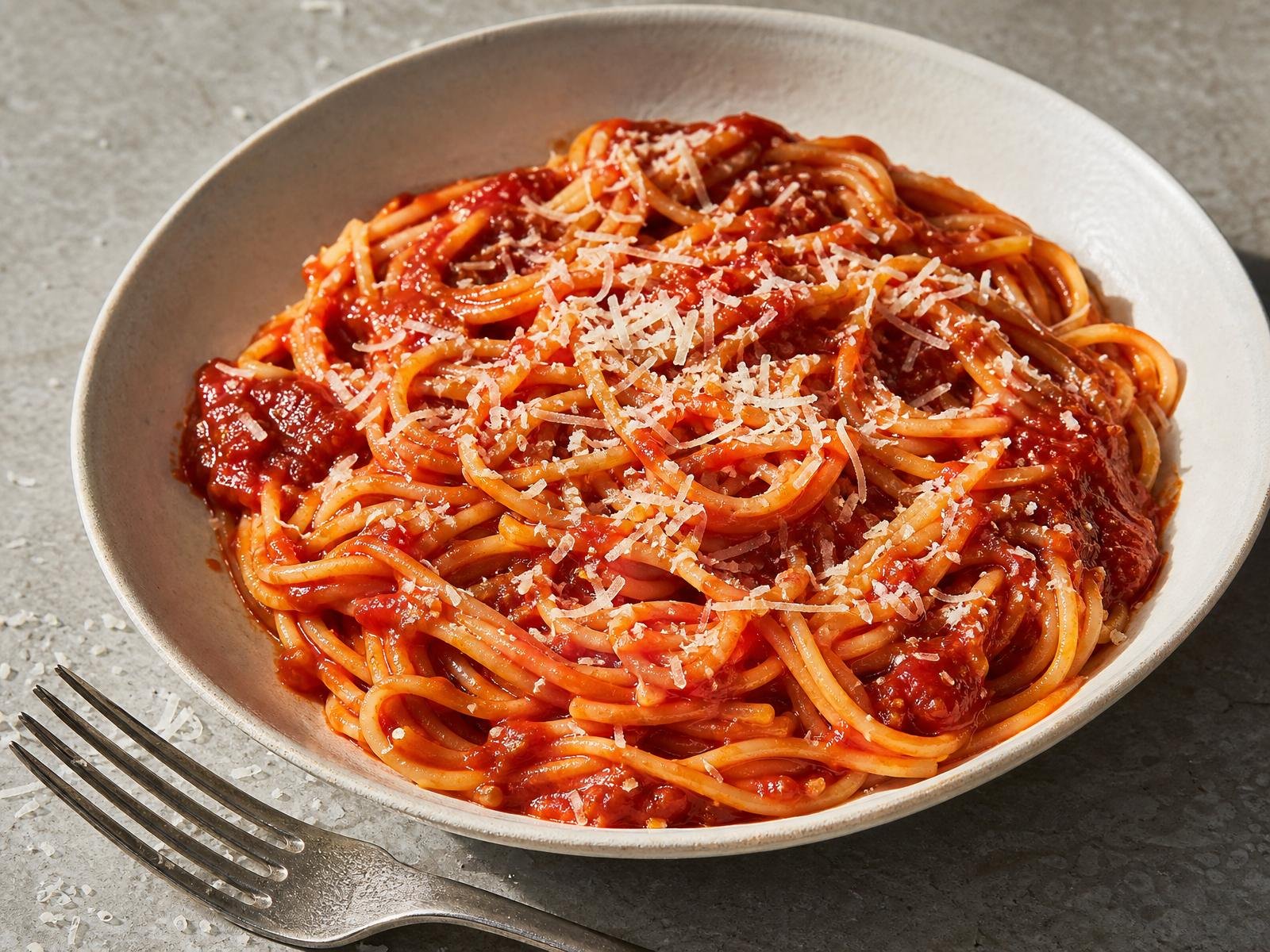
Thermos Spaghetti
Ingredients
Method
- Fill a vacuum flask with boiling water, seal it, and leave it standing while you cook.
- Cook the spaghetti in salted water until just short of tender, about 1 minute less than the packet says. Drain well.
- Warm the sauce in the same pot, then stir the drained spaghetti through it until every strand is coated and steaming.
- Tip the water out of the flask and shake it dry. Fill it right to the top with the hot pasta, packing it down to leave as little air as possible.
- Scatter the Parmesan over the top and seal the lid immediately.
Notes
Why spaghetti works better in a thermos than most hot food
Not every hot meal travels well. Soup sloshes, rice clumps, and anything with a loose sauce leaks into the seal. Spaghetti sits in the middle of the flask as one soft mass, so it holds its heat longer and it is easy for a child to eat with a fork in a short lunch break.
The sauce matters too. A thick tomato sauce clings to the pasta instead of pooling at the bottom. If your sauce is thin, let it reduce for a few extra minutes before you mix it through.
The five minute trick that keeps it hot until lunch
Most people fill a flask with hot food and hope. That loses heat immediately, because the cold steel wall pulls warmth out of the food as soon as it touches it.
- Preheat the flask. Fill it with boiling water, screw the lid on, and leave it standing while you cook and drain the pasta. Do not skip this. It is the single step that decides whether lunch is hot or lukewarm.
- Heat the pasta and sauce together. Warm the sauce in the same pot, then stir the drained spaghetti through it so every strand is coated and steaming.
- Empty and dry the flask. Tip the water out and give it one quick shake. Do not wipe it with a cold cloth.
- Fill it right to the top. Trapped air is trapped heat loss. Pack the pasta down so there is almost no space under the lid.
- Seal it immediately. Every second with the lid off is heat leaving.
Which pasta shapes survive a thermos
Long pasta works best, but it needs to fit. Break spaghetti in half before cooking so it sits flat in the flask and your child is not wrestling with a metre of noodle at the table.
Short shapes are easier to eat but hold less heat because they leave more air gaps. If you use penne, fusilli or shells, choose a chunky shape, fill the flask completely, and add a little extra sauce so the gaps are filled. Very small shapes such as orzo or pastina turn into a solid block and are best avoided here.
Cook the pasta a minute less than the packet says. It continues to soften in the flask, and pasta that starts out perfect ends up soft by lunch.
Make ahead: what to do the night before
You can do most of the work the evening before, and it does not affect the result.
- Sauce: makes and keeps in the fridge for four days. Cool it fully, then store it in a sealed tub.
- Pasta: cook and drain it, toss it with a teaspoon of olive oil so it does not stick, and refrigerate it separately from the sauce. Keeping them apart stops the pasta going mushy overnight.
- Morning: reheat the sauce, stir the pasta through until it is properly hot, then fill the preheated flask.
Do not fill the flask the night before. A flask that has been standing for twelve hours will not be hot at lunchtime, and it is not safe to hold warm food for that long.
Packing and food safety
Hot food has to stay hot, not warm. The risk zone for food sitting at room temperature is the middle: warm enough to be comfortable, not hot enough to be safe. Most food safety authorities work to a two hour limit for food left in that middle zone, and a school lunch sits in a bag for longer than that.
A good vacuum flask, preheated and filled to the top, holds food hot for around four to five hours. That is enough for a normal school day, provided you follow the steps above.
Three practical rules:
- Fill the flask with food that is properly hot, straight from the pot. Warm is not enough.
- Tell your child to keep the bag out of direct sun and not to leave the flask open.
- Anything left uneaten at the end of the day should be thrown away, not kept for tomorrow.
Use a flask you can clean thoroughly. The seal and the rim are where bacteria collect, so wash them in hot soapy water every day and leave the flask open to dry.
Substitutions and allergy swaps
- Gluten free: use gluten free spaghetti and cook it two minutes less, because it breaks down faster in a flask. Check your stock cube, if you use one.
- Dairy free: leave out the Parmesan or use a dairy free hard cheese. The sauce does not need it.
- No pork or halal: this recipe is already meat free. If you add sausage or bacon, use a suitable alternative.
- Fussy eaters: blitz the sauce smooth before mixing. Many children who pick out tomato pieces will eat the same sauce when it is blended.
- Less mess: stir a tablespoon of cream cheese into the hot sauce. It thickens the sauce so it clings and does not drip on school uniform.
Three variations to stop it getting boring
- Hidden veg: add a grated carrot and a grated courgette to the sauce while it simmers. They disappear into the tomato.
- Cheesy bake flavour: stir a spoon of cream cheese and a pinch of mustard powder into the sauce before you fill the flask.
- Meatball version: add four or five small cooked meatballs. Warm them through in the sauce so everything goes in hot.
Frequently asked questions
Can I put spaghetti in a thermos the night before?
No. The flask will not keep it hot from evening to lunchtime, and holding warm food for that long is not safe. Cook the sauce ahead instead, then reheat and fill the flask in the morning.
How do I stop the pasta sticking together in the flask?
Toss the drained pasta with the hot sauce rather than packing plain pasta and adding sauce later. The coating of sauce keeps the strands separate, and it also helps the whole flask hold its heat.
Will a cheap thermos work?
It depends far more on preheating than on price. A budget vacuum flask that has been filled with boiling water for five minutes will outperform an expensive one that has not.
What if my child will not eat it hot?
Spaghetti is one of the few dishes that is still good cold. If your child prefers it that way, pack it in a normal lunchbox with a cold pack instead of a flask.
More lunchbox ideas
If you are building a rotation, these are the posts parents come back to most:
- Ham and Cheese Muffins, a freezer friendly bake you can make once and use all week.
- Pasta Salad for Lunchbox, the cold option when a flask is not practical.
- No-Heat Lunchbox, for days when there is no time to cook anything.
- High-Protein Lunchbox, if you are trying to make lunch last until dinner.
- Egg and Cheese Muffin Cups, another hot item that packs well.
Image note: the dish images on this page are AI-generated, created to show the finished recipe. They are not photographs.


