One Pot Pasta
One pot pasta is the dinner you make when you cannot face a sink full of washing up. Everything goes into a single pot, the pasta cooks in the sauce rather than in separate water, and the starch that would have gone down the drain stays behind to thicken everything.
It takes about twenty minutes, it uses seven ingredients, and most of them are things you already have in the cupboard.
One Pot Pasta
Ingredients
Method
- Warm the olive oil in a wide pot over a medium heat and soften the onion for 3 to 4 minutes.
- Add the garlic and cook for another 30 seconds, until it smells sweet rather than sharp.
- Add the spaghetti, crushed tomatoes, broth and Italian seasoning. Stir so the pasta is mostly under the liquid.
- Bring to a boil, then reduce to a strong simmer. Cook for 12 to 15 minutes, stirring every couple of minutes and scraping the base of the pot.
- Stop when the pasta is just tender and the sauce is glossy. If it looks loose, cook uncovered for another minute. If it looks dry, add a splash of hot water.
- Take the pot off the heat and stir in the Parmesan. Taste and season, then serve.
Notes
Why cooking the pasta in the sauce works
Normally you boil pasta in a large pot of salted water and throw the water away. That water is full of starch, which is exactly what makes a sauce cling to pasta instead of sliding off it.
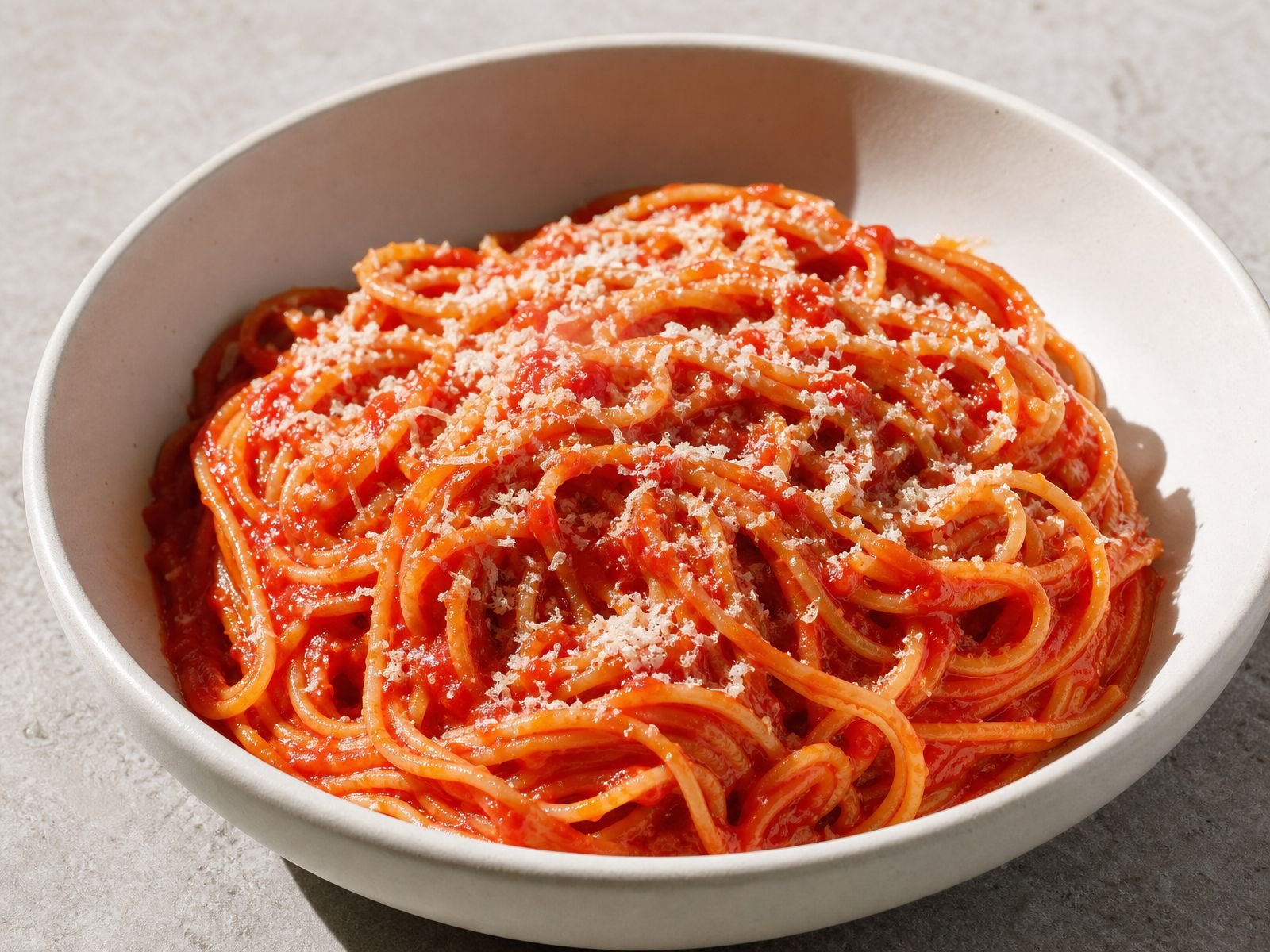
When you cook the pasta directly in the tomatoes and stock, that starch stays in the pot and thickens the sauce as it goes. You finish with a glossy sauce that coats every strand, without adding cream, butter or a separate jar of sauce.
It also means one pot, one hob ring and about five minutes of actual attention.
The method, and the one step people get wrong
- Use a wide pot, not a deep narrow one. The pasta needs room to lie flat and the liquid needs surface area to reduce.
- Break the spaghetti in half so it fits under the liquid from the start. If you leave it whole, the top half stays dry and cooks unevenly.
- Bring it to a boil, then drop to a strong simmer. A hard boil will reduce the liquid too fast and leave the pasta chalky in the middle.
- Stir every couple of minutes, scraping the base. This is the step people skip. Without it the pasta sinks, sticks and burns on the bottom of the pot.
- Stop when the pasta is just tender and the sauce is glossy. If it looks watery, keep it uncovered for another minute. If it looks dry before the pasta is done, add a splash of hot water, not cold.
- Take it off the heat before you stir in the Parmesan. Cheese added to a boiling pot splits and goes stringy.
Ingredient notes
- Tinned tomatoes: a 400 g tin of crushed or chopped tomatoes. Crushed gives a smoother sauce. If you only have whole tomatoes, break them up with a spoon as they cook.
- Vegetable broth: a stock cube in hot water is fine. Because the liquid reduces into the sauce, a weak stock gives a thin tasting dish. Use a good one, and taste before adding salt.
- Parmesan: buy a block and grate it yourself. Pre-grated cheese is coated in anti-caking starch and clumps in the sauce.
- Olive oil: a tablespoon at the start to soften the onion and garlic. It also helps stop the pasta sticking.
What it costs
The cost of this dish is driven by three things: the pasta, the tin of tomatoes, and the cheese. Everything else is a pantry item you buy once and use for weeks.
To work out your own cost per serving, add up what you paid for the pasta, one tin of tomatoes, one onion, one stock cube and the Parmesan you used, then divide by four. Own-brand tinned tomatoes and block cheese instead of pre-grated make the biggest difference, and the dish gets cheaper the larger the packet you buy. Store cupboard herbs and garlic cost so little per portion that they are not worth counting.
It works out as one of the cheapest hot dinners on this site, and it is made from ingredients that keep for months.
Make ahead and leftovers
- Fridge: keeps for three days in a sealed container.
- Reheating: a splash of water in the pan or a covered bowl in the microwave. The pasta will have absorbed sauce overnight, so it always needs a little liquid added back.
- Freezing: possible but not ideal. Cooked pasta softens a lot on thawing. If you do freeze it, freeze it before adding the Parmesan and reheat gently.
- Cold: this is also good eaten cold, straight from the fridge, which makes it a workable lunchbox option if you have leftovers.
Substitutions and allergy swaps
- Vegan: leave out the Parmesan or use a dairy free hard cheese. Add a tablespoon of nutritional yeast for the savoury note.
- Gluten free: use gluten free spaghetti and reduce the cooking time by two to three minutes, checking from the eight minute mark.
- Different pasta: penne, fusilli and linguine all work. Reduce the liquid by about a quarter cup for short shapes, because they pack more tightly in the pot.
- More vegetables: add sliced courgette, mushrooms or spinach in the last five minutes. Spinach should go in right at the end, off the heat.
- More protein: a tin of drained chickpeas or white beans goes in with the pasta and needs no extra cooking.
Three variations
- Spicy: a pinch of chilli flakes with the garlic, and a squeeze of lemon at the end.
- Creamy: stir a spoon of cream cheese through off the heat, just before the Parmesan.
- Bolognese style: brown 250 g of mince first, then continue as written, adding an extra half cup of stock.
Frequently asked questions
Why did my one pot pasta turn out mushy?
Too much liquid, or too long on the heat. The pasta keeps absorbing sauce as long as it is wet, so take the pot off the heat the moment the pasta is tender, even if the sauce still looks a little loose. It will thicken as it stands.
Do I need to salt the water?
There is no water to salt. Season the sauce instead, but wait until the end, because the stock and the Parmesan both add salt and it is easy to overshoot.
Can I double this recipe?
Yes, but use a much wider pot and do not double the liquid exactly. Start with one and a half times the liquid and add more if the pot looks dry. A crowded pot cooks unevenly and sticks.
Is this the same as a pasta bake?
No. A pasta bake cooks the pasta separately, mixes it with sauce and bakes it with cheese on top. This is faster, uses one pot, and is finished on the hob.
More budget dinners
If one pot pasta is going into your weeknight rotation, these come from the same shelf in the cupboard:
- Simple Tomato Pasta, the five ingredient version.
- Pantry Pasta, for when the fridge is empty.
- Jacket Potato with Beans, the other cheap family dinner.
- Spinach and Ricotta Pasta, if you want something a bit richer.
- Baked Beans on Toast, for the nights when twenty minutes feels too long.
Image note: the dish images on this page are AI-generated, created to show the finished recipe. They are not photographs.